
Maritime Throwdown Partners with Texas A&M University at Galveston and Texas A&M Maritime Academy,...
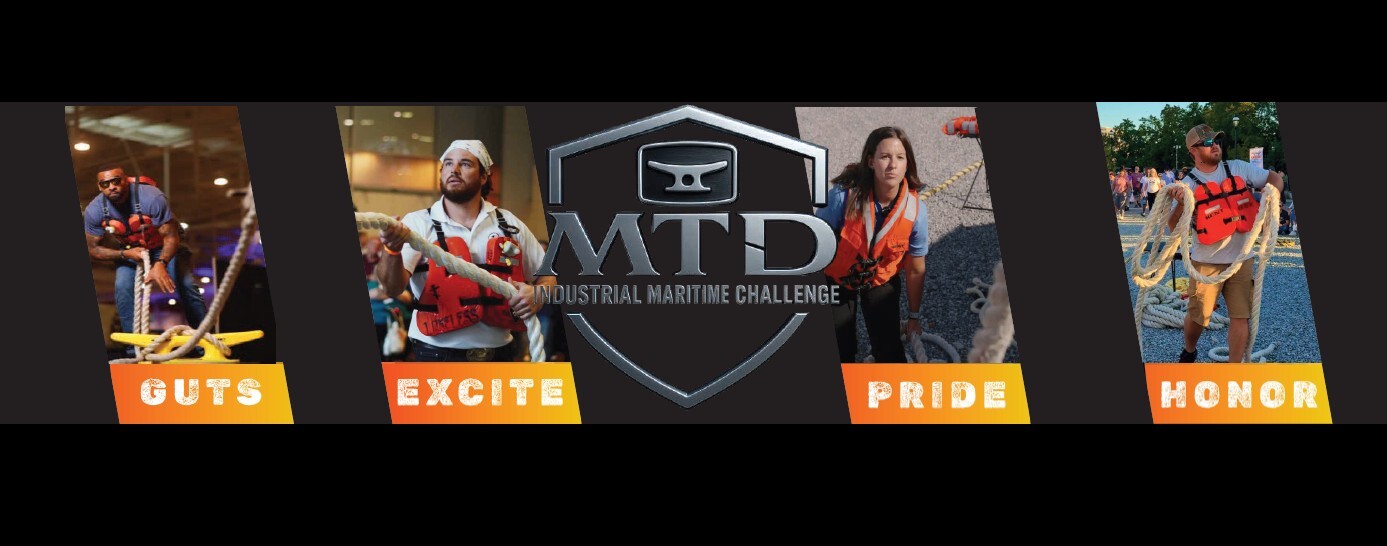
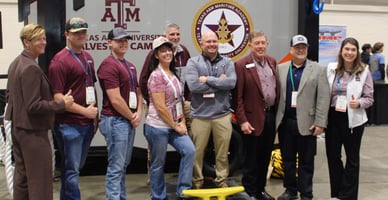
For nearly a decade, Maritime Throwdown’s (MTD) Incentivized Maritime Training has spotlighted the passionate professionals who support our national economy through the Inland and Gulf Coast Waterways system. In December 2025, MTD and Texas A&M University’s Galveston Campus Maritime Academy officially launched the Maritime Throwdown Movement — expanding the initiative to include coastal and Great Lakes waterways systems and their training centers of excellence.
“We look forward to spending time in Portland, OR and Seattle, WA in March, followed by visits to New York, NY, Boston, MA, and Portland, ME in April,” explains Captain Brown. “We are meeting directly with academies and regional training centers to showcase our ‘shovel-ready,’ patent-pending turnkey training equipment and instructor materials.”
Early response from CEOs, superintendents, and general managers at established maritime training universities, colleges, and academies has been overwhelmingly positive, with many expressing surprise at both the effectiveness and affordability of the program.

America’s Maritime Action Plan, released this week by the The White House, reinforces a national priority that directly aligns with the mission and momentum of The Maritime Throwdown — advancing workforce development and industrial maritime skills training.
Pillar II of the AMAP outlines decisive actions to strengthen and modernize the maritime workforce pipeline, including:
- Expanding mariner training and education through maritime institutions and workforce transition programs to meet growing industry demands.
- Providing financial and regulatory incentives to accelerate training for shipbuilders and U.S.-credentialed mariners.
- Modernizing the United States Merchant Marine Academy (USMMA) through targeted federal investment, addressing critical infrastructure needs and implementing a long-term capital improvement strategy.
- Enhancing maritime training capabilities nationwide to ensure programs align with real-world operational and industry requirements.
These national priorities underscore the urgent need for scalable, industry-driven training solutions that deliver measurable skills development, accelerate workforce readiness, and strengthen America’s maritime competitiveness.
America’s Maritime Action Plan highlights a clear national directive: expand academy capacity, strengthen workforce pipelines, and accelerate industry-aligned training capabilities — priorities that directly reinforce the mission of The Maritime Throwdown and its industry-driven training model.
Academy Capacities and Workforce Pipelines
The plan calls for working with State Maritime Academies (SMAs) to expand enrollment capacity when sustained demand exists for programs leading to a Merchant Mariner Credential (MMC) with officer endorsement. Key recommendations include:
- Increasing Department of Transportation support for the Center of Excellence (COE) for Domestic Maritime Workforce Training and Education.
- Expanding COE support to include Registered Apprenticeships, community colleges, and accelerated trades programs.
- Developing scalable pathways that produce more credentialed mariners and address workforce shortages across inland, coastal, and Great Lakes operations.
Increased Support for State Maritime Academies
The six State Maritime Academies play a critical role in the national maritime workforce pipeline:
- California State University Maritime Academy
- Maine Maritime Academy
- Massachusetts Maritime Academy
- Great Lakes Maritime Academy
- SUNY Maritime College
- Texas A&M Maritime Academy
These institutions strengthen maritime education through state-supported higher education systems, providing a foundation for officer training, technical skill development, and workforce readiness.
Maritime Industry Needs – Enhancing Training Capabilities
The AMAP emphasizes actionable priorities aligned with industry demand:
- Expand talent pipelines through regional training partnerships.
- Cultivate, expand, and retain a skilled maritime workforce.
- Invest strategically in workforce development programs that deliver measurable operational skills and safety outcomes.
Together, these initiatives signal a nationwide commitment to scalable, industry-relevant training solutions designed to close workforce gaps, accelerate credential attainment, and strengthen America’s maritime competitiveness.
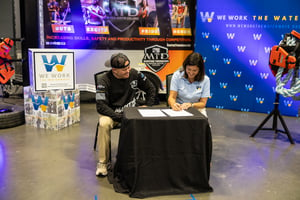
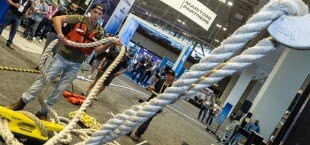

If your Maritime Training Center or Education Program is ready to rapidly deploy an introductory, industry-based Line Manipulation Certification, connect with The Maritime Throwdown.
Our patent-pending Industrial Training Rig and Scoring Matrix curriculum are available now—shovel-ready, turnkey, and customizable to meet your audience’s specific maritime operating requirements. Designed for immediate integration, proven to elevate skills, safety, and performance.